Kamis, 02 Juni 2016

The Star45 Model Sail Boat A radio controlled R C Sailing Model


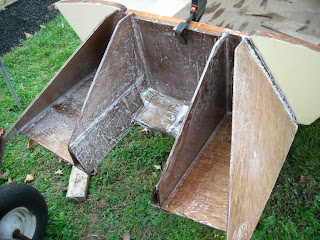
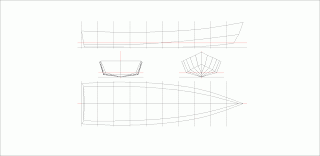
The Star 45 is a 45" long hard chine hull; semi-scale model of the full-size Olympic Star. They weigh 12 pounds plus, have 12 inch beam. They are easy to scratch build and sail. Well suited for building by by the novice builder and by the skipper looking for a classic looking model to race.
Read More..

Swan 38 The Definitive Cruiser Racer

Readers of novels are willing to believe the most outrageous and tortuous plots - in the case of my, as yet, unfinished novel its about unethical journalism, civil service corruption and murderous politicians - but only if the small, familiar details are correct. Since the central character in the tale I am currently writing, has to sail through, and survive, a terrifyingly violent storm, and later prevail in a fight with one of the chief villains, while navigating the overfalls of a treacherous tiderace, in a wind-over-tide gale, (guess who goes overboard!) my choice of boat was an easy one. Just as James Bond would not be credible without his Walther pistol and his Aston Martin, my storys hero, so my theory goes, could not be sent into stormy waters in an inadequate boat. If the detail is wrong, the plot will sink without trace.

The above, I hope, helps explain two things; why I have been too occupied to write here for a couple of months, and why Im now writing about a Finnish boat instead of a French one.

The Swan 38 is one of my two or three favourite ever boats, and the only one I could choose for my fictional hero. If I wanted a boat I could trust to last me for the rest of my life, and to take me anywhere I desired to sail, the Sparkman and Stephens designed Swan 38 would be number one on my list. In terms of quality of build, design pedigree, strength, longevity and looks, this boat can stand comparison with any other yacht produced anywhere, at any time. But what makes the Swan 38 better, to my mind, than any other yacht of its size, is its ability to make open sea passages in all weathers, while keeping its crew comfortable, confident, and rested.

The design was commissioned from the legendary New York architects Sparkman and Stephens by the Finnish yachtbuilders Oy Nautor Ab in 1974. Nautor had already had considerable commercial success with a series of S&S designed Swans ranging from 36 to 65 ft LOA. The Swan 38 was designed as a more compact version of their outstandingly successful 1967 Swan 43 design, which had proved to be a fast boat at every level of racing competition, even winning a place in the 3 boat British Admirals Cup team of 1969.

At the time of its introduction, Nautor had recently undergone a change of management, but the new owners were as determined as the founder, Pekka Koskenkylä, to build yachts of the highest quality. The 38 is no exception. Its backbone is a massive stainless steel girder, solidly glassed into the bottom of the hull. This rigid base carries the loads of the mast and of the 7000lb keel and endows the GRP hull with enormous strength and stiffness. Most of the boats were built with a teak deck beautifully laid on top of the GRP top moulding. This deck, though lovely to look at, will inevitably need replacing one day at considerable cost, and for the keen racer, its weight must be considered unnecessary. But, if youre thinking of becoming the owner of a Swan, you will probably be prepared to put up with the extra expense, every quarter-century or so, in order to be able to walk those teak planks.

No doubt experts will correct me if Im wrong, but I believe the 38 was the first of the Swans to sport the signature, low, slope-sided, coachroof wedge which seems to grow out of the deck and merge into the cockpit coaming, and which, for a time, became a characteristic feature of the marque, until it was copied by many other designers. This feature makes the decks appear wider and allows excellent forward visibility from the cockpit.

Down below the joinery is immaculately made and polished to a cabinetmakers finish. The Swan 38 was considered a roomy yacht in its day, and although it cant now compare for spaciousness with modern yachts of similar overall length, the hulls deep sections and relatively substantial displacement give it plenty of volume, so storage space is generous and useful.

Unlike the larger 43 of the same era, the main saloon is abaft the through-deck mast, so the social space is unobstructed. There are good seagoing pilot berths outboard of the settee berths so that the off-watch crew can sleep securely in bad weather.

The forward facing chart table to port allows the navigator to work on a large flat area, with bulkhead space for instruments, under-desk storage for charts, and, on some boats, a useful shelf for pilot books, without disturbing any resting crew. It is separated from the decent size galley opposite by the engine box and companionway steps. Behind the navigator there is a good size oilskin locker.

Further aft there is a usefully private, if slightly cramped, aft cabin under the cockpit. It is reached by a short passage on the port side, and it offers a double berth for when you get lucky in harbour, as well as a single quarter berth to port. Theres not much headroom here, but the space gives the owner or skipper some privacy, and allows him, or her, while lying in the starboard double berth, to communicate with the crew through an opening hatch to the saloon, or through a small opening port into the cockpit.

Forward of the mast there is an adequately roomy WC/shower compartment to port with hanging locker and drawer space to starboard. Further forward still, the forecabin is dominated by bin stowage for the wardrobe of racing sails that a yacht of this type would have been expected to carry. Pipecots fold down over the bins when needed for harbour use. Many of the boats have now been adapted, for cruising or charter, by having this space converted into a proper cabin for two with a permanent V berth.

The cockpit is comfortable but not overlarge, as in inshore racing situations most of the crew would be on deck, either perched on the weather rail or operating halyards, downhauls and winches grouped on a flat working area of the cabin roof abaft the mast. When racing or cruising offshore, only half the crew could be expected to be in the cockpit at once; the rest would be below for much of the time. There is a liferaft stowage locker to port, and a bridge deck which, together with a single shallow hatch slide, prevents water from a flooded cockpit entering the cabin.

The Swan 38 is an easy boat to sail. Her wide decks enable rapid and safe crew movement for sailhandling and harbour manoeuvres, and the simple, single-spreader rig enables her to be sailed shorthanded. Being a pedigree S&S design, she handles beautifully on all points of sailing, especially to windward, when she can be trimmed to balance perfectly with just enough weather helm for feel. Like most IOR inspired yachts of her day she can sometimes be a handful when sailing fully-powered dead downwind.

Production of the Swan 38 ended in 1979 with 116 hulls built. Today most examples will have been fitted with headsail roller reefing gear and modern electronic navigation aids. The best examples will have been professionally maintained by a top quality yard and may have new teak decks and an upgraded modern diesel. If you want one you will probably have to spend £70-100,000, but this could turn out to be an excellent investment, as prices are unlikely ever to fall below todays.

The Swan 38, in my opinion, is the best cruiser/racer ever. She may not be as fast downwind in smooth water as a some other boats of her size. She may not be as roomy as most more modern 38 footers. She wont plane on a reach at 15 knots in a 12 knot breeze like some of todays ultra-lightweight scaled-up dinghies. She is, however, one of a very few great sailing boats that can win races, cross oceans, go weekend family cruising or shorthanded passage making and can be absolutely relied on to make ground to windward in gale force wind and heavy seas when your life depends on it. As a bonus, she is strongly built and finished to immaculate standards by Nautor of Finland, a marque which, for yachtsmen of my age, carries the same exclusive cachet and promise of quality, as the Rolls-Royce brand once did for motorists.


Swan 38


Designer: Sparkman & Stephens
Builder: Oy Nautor Ab (now called Nautors Swan)

LOA 38-0"
LWL 28-9"
Beam 11-7"
Draft 6-4"
Displacement 16,120 lbs
Ballast 7,050 lbs
Sail Area 682 sq ft

Acknowledgements:

Thanks to James Bull of Swan Yacht Charter for permission to use the images shown here. More photos and details of the Swan 38 "Cimaroon", available for charter, can be found at the Swan Yacht Charter website

Further links:
Article at Boats.com
Sparkman & Stephens (to view drawings and plans)

Read More..

Rabu, 01 Juni 2016

Yelapa

??
We were ever so glad to get out of Puerto Vallarta. Its not that PV is a bad place, its just that life is better away from the hustle and bustle of the city... any city. Once out of the harbor we headed southwest along the beautiful southern coast of Banderas Bay, looking in on picturesque small anchorages along the way toward Yelapa. We arrived there around 1500 and took a mooring instead of anchoring in the small and very deep bay. The village of Yelapa is situated at the head of a small cove backed by beautiful little valley that is fed by a small river. It is a very photogenic spot. Access to Yelapa by land is limited to a single road that tends to wash out in severe rains, so the place is quite isolated and most people arrive by boat. Unfortunately the place was discovered by hippies in the 1960s, which led to a continuous deluge of tourists ever since. Before the hippies arrived and coined the phrase "a palapa in Yelapa...." it was a sleepy fishing village. Now everyone who lives there is an entrepreneur in the tourist industry, hawking jewelry, photos with Pepe the Iguana, clothing with Yelapa across the front and back, tours to the waterfall up the river, sightseeing boats, fishing boats, horseback riding, four dollar beers and eight dollar coco locos. (We took advantage of the iguana photos, the beer and the coco locos).  Its a bit disappointing to see this stunningly beautiful place converted to a cash cow, but its their place and they can do with it what they want. Anyway, we spent the afternoon sunning and touring, sipping and pondering the scenery, then got back aboard the boat for a rough and rolly, and fairly sleepless night. The cove faces northwest, exposed to every swell that rolls in from the Pacific Ocean. With the night breeze blowing down from the mountains and the swells rolling in from the opposite direction, the Honcho was rolled and bounced all night long, leaving the crew rather unhappy in the morning. But it sure is a pretty spot.
Jaime working on the coconut

Lisa working on the coco loco


?
?
?
??
????
Mexican Anchor made of rebar

The Honcho in Yelapa
????
Read More..

Up Date on Seating Positions in Dinghies

Rick has written an excellent comment about the previous post - please take the time to look at it, as the idea is very good indeed. I have thought of a similar system, but Ricks is the best idea yet.

Having sailed in a few small boats myself, I concur very strongly with Ross regarding side benches. If the seaway gets a bit active, they get in the way very quickly. If one really MUST have them, they should always be removable, but latched down with buttons so they dont come loose when things get really rough, as sooner or later they will if you sail much.

As for me, same as Ross; sitting low in the bottom of the boat with back against the coaming, or sitting on the windward washboard (side deck) is the way to sail a small boat.

For sleeping with a decent amount of dry, level room in a small open boat, one you wont roll off of, why not build in a pair of risers just above the height of the thwart and the sternsheets, with buttons on the backside of each, facing outward to the hulls planking? Then when you want to sleep aboard, you unroll your strong canvas trampoline, slip its grommets over the buttons, stretching it between the risers, and sleep on that up out of bilgewater and high enough above the thwart and sternsheets to avoid hard corners in your back. On some boats that might create a space wide enough for two to sleep.

No need for the obstruction of side benches at all, and the risers, if made a bit wide in their vertical plane and thought out carefully, notched into half frames, should make a good backrest supplementing the coaming or washboard carlin each side. Adds a bit of weight, but Ill wager that itll be a lot less than the side benches, with no obstruction of internal space and no loose hunks of wood coming loose on you at the worst possible time.


Also, Geoff Leedham has emailed me to say that there is no obvious support for the seats when in the centre location. The cleats for the centre location hadnt been installed at the time the photos of the seats in the "side seat" location were taken. However, in the shot where you can see the seats butted together in the centre "sleeping flat" position, there are 19mm x 19mm (3/4" x 3/4") cleats screwed to the forward face of the stern sheets, and to the aft face of the main thwart. Look at this photo and you can see the outer cleats - there are similar ones under the "sleeping flat" set-up on the centreline. It is a very simple arrangement.

Read More..

Swedish Sailing Pilot Boat Lotsbat Skum

Geoff Leedham is a teacher at St. Philips College Alice Springs, here in Australia. Alice Springs is right in the centre of Australia, thousands and thousands of kilometres from any coastline, right out in the desert country. Yes, you have to have schools everywhere, but what makes Geoff unusual as a teacher is that in this arid and remote location he runs a boatbuilding program for high school students. Geoffs program involves at least four different designs (to my knowledge - there may be more) and exposes the participants to a range of differing construction methods and techniques - for this I commend him.

Geoff with some of his students. The beautiful boat they have built, and are displaying here, is an Iain Oughtred-designed John Dory
Imagine what sorts of problem-solving issues have been dealt with by the high school students who built this boat
Another view of the John Dory as she sits in the school foyer, displaying the complexity of work required from a young team - art, engineering, chemistry, arithmetic, manual arts, project management and housekeeping to name a few.
As you may have determined, Geoff Leedham is an enthusiast, and like all nautically afflicted people, he has his own dreams. Some months ago, Geoff approached me by email and phone, seeking help with a pet project. The design he wishes to build represents a Sailing Pilot Boat from around 1910, and Geoff has obtained basic historical drawings from Bertil Andersson in Sweden. http://www.batritningar.se/Default.aspx.

There are two problems: -
  • there is no table-of-offsets;
  • Geoff wants to build in glued lapstrake and therefore hopes to minimise reverse curvature in the hull to simplify construction.
With this in mind, and having spoken with the plans supplier, Geoff asked me whether I could produce a modified set of lines which avoid the use of reversed sectional curvature, supply a set of building offsets, and draw up a schedule of scantlings for the new construction method. And just to top it off he wanted a heart-shaped transom in place of the original wine-glass.

An outboard profile and plan view taken from Bertil Anderssons website. Id like to show you the body plan so as to give some indication of the extreme reverse curvature, but I do not want to show material without permission. However, you can take it from me - this is a curvatious boat in the extreme!
Here are the principal dimensions courtesy of Bertil Andersson: -

LotsbåtSkum
20½ foot.Length 6190, width 1800 mm.From Kalmarsund. Build in 1910s by Pelle Fräsare in Kalmar, Småland. Completely in oak.


Wondering whether my friend Mr Leedham had handed me a poisoned chalice, I gave it my best shot, and here are the results: -

These are my lines incorporating many changes from the original boat (which I commend to you, with the suggestion that you purchase plans from Bertil Andersson). You can see that cross-sectional reverse curvature has been reduced greatly, particularly amidships and in the run, but that the profile and plan have remained in the spirit of the original. This will be a lighter boat, reflecting her changed construction method, but she retains the character of the original with minimal changes. 


The above renderings show the modified Skum at 6.197m x 1.836m x 0.525m draft ( 20 4" x 6 3" x 1 8-1/2") at a displacedment of 1041kg (2,290 lbs)

Below is a youtube video showing a fibreglass replica of the same, or similar boat to the one in the original drawings, under sail.


In addition to the lines drawings and off-sets, I have supplied Geof Leedham with a fairly detailed scantlings schedule, which I may publish if there is interest, and if Geoff agrees. He has paid me some money, and I need to be sensible with what I publish in case he refuses to take me for a sail!

Isnt it amazing to see what comes from a scheme to build boats in the desert?

Read More..

Goat Island Skiff Boat Kits Available


Our first kit offering at Clint Chase Boatbuilder is a plywood and timber kit for the Michael Storer designed Goat Island Skiff (GIS). Why buy a kit? Folks are sometimes offended when I suggest this, feeling that it is thought they dont have the skills to make the parts themselves, but that is not it at all. We build all of our boats in the shop from kits!!! Even professionals do it and the reason is that it makes the build process quicker and smoother and the result is more professional. In the case of the GIS, we have made parts and built the hull of the boat, making all the small tweaks that professionals with a good eye make to the lines of the boat to make them look eye-sweet. Any design, no matter how well drawn, will need some eyes on it in 3D to make final tweaks. We also have checked bevels and made some adjustments for a rabbeted gunwale, which covers the end grain exposed at the top of the gunwale. Our kit captures all these professional practices so you can get a better boat. Currently, kits are cut per order, but we may move to CNC when volume increases.

We were attracted to this design initially because of the sail plan, a beautifully proportioned Balanced Lug. Upon further reflection we noticed something was missing for RAID sailors and for others who might use the boat as a sail & oar craft. It needed a mizzen. A small mizzen gives great control of a small boat, allowing one to lie head-to-wind for reefing at sea or for heaving-to. It allows you to back off a beach or a dock, with practice. It is useful for trimming the sail plan, adjusting weather helm to create "feel" in the tiller. A mizzen makes single handing much easier, especially for switching between oars and sail, because the boat will tend itself and stay head-to-wind while you stow oars and fidget with things at the mast. For a useful diagram showing How to Sail a Lug-Yawl, by James McMullen.

We can supply a kit for the GIS as well as the mast and spars. Masts are round, hollow using the Birdsmouth technique. Yard and boom for the GIS are solid, laminated Northern White Spruce. Laminated spars stay straighter over time with changes in moisture content in the wood. We can make custom 9 oars specifically designed for the GIS. Rowing in the Goat Island Skiff is quite enjoyable, whether it is from the dock to a local area with wind, or coming back when the wind has petered out. Products for the Goat Island Skiff can be seen in the GIS Flyer on our website Goat Island Skiff Page.
Read More..

Selasa, 31 Mei 2016

Fleet a Planing Hull Version of Flint

Back in about 2003 I was asked to design a rowing/small outboard boat for operations in a short, steep chop, with the emphasis on lack of pounding. The resulting boat, named Flint, has been very successful and popular. She is very easy to build - if you follow the assembly sequence - and a distictive feature of her hull is the fine, hollow sections in the forward part of the boat. What is amazing is that this shape can be produced from a single developed plywood panel. I have tried to achieve this sort of shape in the past using conventional projection of developable panels, but the geometry required to produce a hollow shape has always defeated me. The arrival of computer programs which have the ability to do the mathematics saved me from myself!

Proof that the hollow sections come from a single panel of plywood
The very first Flint, built by Eddie Guy
In recent times I have been approached by a number of people who have wanted to build a planing version of Flint. The hull of the original rowing/sailing/small outboard version is of the displacement type, although her fine sections and high length-to-breadth ratio mean that she can be pushed faster than her theoetical displacement speed which is 5 knots. On launching day we got her to 6.1 knots with two adults and two teenagers onboard, using a 2hp Yamaha at part throttle. Steve Dorrington got his to a speed of 6.2 knots under the urge of British Seagull 40-plus - certainly an achievement!

Steve Dorrington measuring his 6.2 Seagull-knots using a GPS. Note how Steve has to sit on the midships thwart in order to retain proper trim. In the case of the planing version, a helms-person should be able to sit aft and operate the outboard without a tiller extension.
Bruce Erney, on the east coast of the USA modified his Flint to take a 6hp motor and got her up to 17 knots, I think, but he needed to put trim tabs on to overcome the tendency of the displacement hull to point her bow at the sky. I was concerned about the exercise, but Bruce had many successful trips while fishing in the big waters.

Bruce Erneys trim-tabs

One of Bruces many fishing trips in his modified Flint

Ive made a number of attempts at drawing a planing version of Flint and things were brought to a head this week when a friend/customer for whom I have great respect, asked me for a semi-disposable planing power boat which he and a friend could build over a weekend or two, to be powered by a 5hp outboard. He looked at few drawings I had on hand, and chose a preliminary sketch of a planing version of Flint, which I drew as a discussion piece for Rick Hayhoe a number of months ago.

Lines Drawing of the original Flint
Lines drawing of the planing version, now called Fleet
In the above drawings you can see the substantial changes made to the shape of the hull aft of the midsection. I have retained the fine, hollow forward sections, although Ive increased the rake of the stem very slightly in order to reduce the severity of the bending and twisting of the plywood panels. With good-quality ply the hull is easy to assemble, but some people still insist on using poor-quality sheets in order to save a dollar, and end up encountering problems - hence the alteration.

My aim with this design is to retain the extemely light and simple style of hull as seen with the original Flint, and to have her run efficiently with nothing larger than a 4hp motor. This is important in my part of the world because we can operate with up to, and including, 4hp without needing to register the boat. The customer wants to use a 5hp, and specifically asked for a water-shedding foredeck and side decks under which he can store fishing gear. He intends taking her into the open Pacific off the Queensland coast here in Australia, and so adequate emergency floatation is essential. His boat will have built-in buoyancy under the sternsheets (aft seating which extends aft in a horseshoe arrangement),  under the midships thwart, and under the large foredeck. We have not finalised details of the arrangement, but here is a very preliminary sketch with the decks and seating shown in blue.

Here is a very sketchy drawing showing one idea of an internal layout. The final version is a fair way off yet, I think. The decks have very pronounced camber to aid in water shedding (those odd looking bits at the bottom are just working drawings to establish the height of the inner edges of the side decks at each station). Note how the cambered foredeck makes the sheer look much flatter than in the undecked original - this is an optical illusion. 
This little article should give some indication of just how much the character of a boat must be changed when the mode of operation is altered. However, a completely open version with a very small motor may retain the spartan feel of the original, while still performing in the semi-planing and planing modes. When the plans are complete and the boat tested, Ill post more details. For those who want to read more about the original Flint follow this link and this link.


Read More..