Rabu, 27 Januari 2016

Los Cabos to Ensenada

We waited patiently for that weather window and it finally materialized on June 19th. We departed San Jose del Cabo at 0830, motoring into a 3 or 4 knot headwind under a gloriously sunny sky. Its about 17 miles from San Jose to San Lucas, and during that time the wind increased to about 17 knots and the sea temperature plummeted from 82 to 70 degrees.

We rounded the point at San Lucas around noon in a building breeze. By the time we reached Cabo Falso, about 4 miles further on, the wind was a steady 27 knots on the nose, with gusts to something over 30. Staying close inshore, we rounded Falso and headed northward along the coast and by 1500 the breeze had dropped to about 12 knots and the rough seas were replaced by easy westerly swells.  Late in the afternoon the breeze dropped even further, and we motored for the next twenty four hours over glassy swells and almost calm wind.

Route from Los Cabos to Turtle Bay.


We arrived at Bahia Santa Maria, about 200 miles from San Jose in the early afternoon of June 20th and anchored about half a mile off the beach in the northwest corner of the bay. We were hoping to go ashore here and explore the beaches and nearby sand dunes, but there was enough of a southerly swell running to make a dinghy landing untenable.  Instead, we got the anchor up and headed out of the bay and into a favorable wind. We sailed all afternoon and into the night until the wind shut off completely around 2100. We arrived at Turtle Bay at dawn on June 22nd. It was a pleasant, quiet day and we spent it catching up on sleep while we waited for Enrique to deliver some fuel, which he did in the late afternoon.

The favorable conditions we had been enjoying were forecast to end soon, so we got underway just after sunrise on June 23rd. Choosing to go up the east side of Isla Cedros, we motored into a very light headwind and flat seas as far as the Dewey Channel, which lies between Isla Natividad and the mainland. There we encountered rough, confused seas until we reached the southern tip of Cedros which provided protection from the northwest wind and seas. The easy conditions lasted until we reached the northern tip of the island. Once beyond the lee of the island we had 20-25 knots of wind on the nose and 5 foot seas for a couple of hours, then the wind moderated but the swells remained big and steep. We slowed to 4 - 5 knots for the next 50 miles to keep the boat from pounding in the unfriendly seas. Throughout the passage from Cedros to Sacramento reef we were bucking a current that sometimes reached a knot and a half.

On the morning of June 24th we passed about 10 miles west of Sacramento reef and found the counter current here to be around half a knot. The rest of the passage to Punta Banda consisted of motoring into 3 to 8 foot seas and overcast skies. We rounded the point around noon on June 25th. With a fair wind, we doused the engine and sailed the last ten miles to Ensenada where we took a berth on gangway A in the Cruiseport Marina. The plan is to stay here until after the Fourth of July holiday, then head north to San Diego for a few days.

Turtle Bay to Ensenada


A few miles south of Punta Banda we were joined for a few minutes by a pod of Orcas. I was so fascinated looking at them, I didnt get many photos.


These are females. Males have taller, more vertical dorsal fins.


While here in Ensenada we were immediately among friends and have been spending our time socializing and cleaning up the boat after the long bash from Los Cabos. A couple of days ago I decided to put a couple of coats of varnish on the cap rails. The first coat went on the starboard rail perfectly, but today, about an hour after I finished putting the second coat on, a squall passed through, dropping a sprinkling of rain. I thought my varnish job was ruined but luckily it survived intact.

Ensenada is our last destination in Mexico, so Ive been taking some time to reflect on all we learned about this beautiful country on this voyage. We saw so many beautiful sights and enjoyed the company of lots of friends, both Mexicans and foreigners, its hard to name one specific thing that stands out as special. I guess the main impression that Im taking with me is that Mexico is getting better. The people seem to have a continuously improving standard of living. The roads, schools, cities and infrastructure all seem to be getting better. Economic activity and industry are vastly better than they were when we cruised here aboard Honcho five years ago. But one thing that hasnt changed is the wonderfully friendly people of Mexico. In my opinion they are among the nicest in the world.

When we arrived here in Ensenada we learned of the recent supreme court decisions in the USA regarding health care and gay marriage. Good health care available to everyone, and tolerance for diversity among our people are worthy goals, so its a nice feeling to know that we are returning to a better USA.

Read More..

S45 Construction John Fisher keel tubes

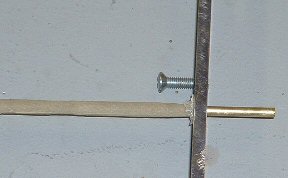
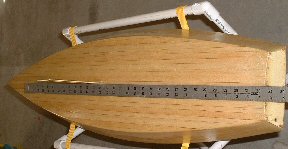
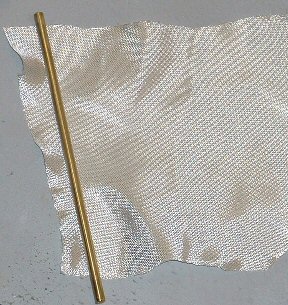
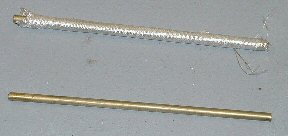
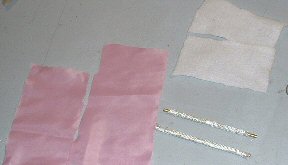
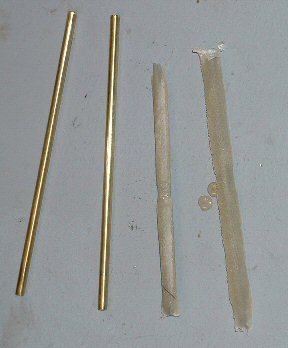
Photo sequence showing how John Fisher made his keel tubes. He was mounting a keel from CPM (David Ramos) with longer keel bolts so they will go through the deck when finished. He coated the brass rod with carnuba wax as a mold release.


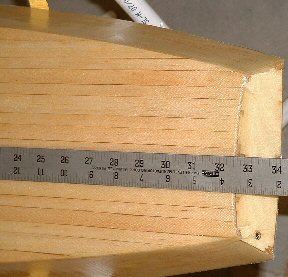
To align the keel tubes John drills the holes in the center of the boat, this is easy to find since it is simply the middle of the king plank and the middle of the two keel planks. Then to align them so they are straight he placed a metal ruler along the two keel bolts or if a flat plate along the plate. Then look at where the end meets the transom. It should be off center by half the amount as the bolts/keel are thick.

John does this on both sides to make sure it is centered. Once the bottom is aligned he tacks it in place with CA, then verify the alignment at the deck the same way.


Read More..

Cruising the Costa Alegre

Finisterra departed from La Cruz on Thursday, January 8th, bound for beautiful Barra de Navidad. Our course took us in a southwesterly direction from La Cruz toward Cabo Corrientes, or Cape of Currents. After rounding the cape, we turned southeast along what is known as the Costa Alegre, or Happy Coast, so named because of the many beautiful coves and beaches along this coast all the way to Manzanillo.

After we left La Cruz the wind filled in nicely, about 12 knots out of the northwest. I hoisted the mainsail with a single reef and unrolled the jib. I put the reef in the main with the expectation that wed find plenty of wind around the Cape, as it often blows pretty hard there. We rounded the Cape around sunset with about 18 knots of wind on the beam, a bit lighter than expected, so it was a very pleasant sail. As night fell we bore off on a southeasterly course and the wind dropped to about 5 knots, still out of the northwest, so we started the engine and motored with the jib furled and main sheeted in tight. Its about 130 miles from La Cruz to Barra and we averaged about 6.5 knots over that distance and arrived early the next morning. We took a berth in the marina at the Grand Bay hotel and spent the next few days relaxing and exploring.


Grand Bay Hotel in Barra de Navidad


The marina is across a shallow channel from the town of Barra. To get there we took the dinghy and landed at a concrete sea wall adjacent to the old Sands Hotel.  To keep the wall from damaging the dinghy we put out a stern anchor.

Its not yet the tourist season in Barra so the town was pretty quiet, and this policeman was relaxing on a very pleasant morning. Notice his hat at lower right. 

Even in La Cruz, the marina was guarded by sub-machine gun toting policia. They are always friendly once they get to know you.


We had lunch at a waterfront restaurant. While their parents enjoyed lunch, local kids had a blast jumping off the railing.
We left Barra on January 13th and motored in no wind a few miles to Bahia Santiago and anchored in the northwest corner of the bay. The water temperature hovered around 83 degrees so it could have been very pleasant swimming, but it was too murky to see much. We spent a day walking along the beach and then took Finisterra around Punta Santiago and anchored off the Las Hadas resort for the next five days. Its a nice anchorage and we had a lot of fun hanging out with friends from S/V Unleashed. Unfortunately the cost to land a dinghy in the marina is now 200 Pesos per day (about $14 USD). There were half a dozen other boats in the anchorage and everyone grumbled about the cost of landing here. We have noticed a lot of price increases in everything, including food, fuel, slip rents, etc. everywhere weve been in Mexico compared to last year. While it is still possible to live more cheaply here than the US, things are changing quickly.

The beach in Bahia Santiago


Finisterra departed Las Hadas the morning of January 19th. This part of the Mexican coast, from Bahia Banderas all the way to Huatulco is known for its light air and for the next 185 miles we motored over a flat sea and no more than three or four knots of wind, with the exception of a few occasional puffs out of the northeast. The water temperature rose to 84 degrees and humidity hovered in the 80% range. With these conditions the air is always a bit hazy. We spent a good part of the day dodging long lines but eventually got far enough out to sea to avoid them. Of course that put is out in the shipping lane, where there is a lot of traffic. Fortunately we are able to spot ships with our AIS system and we had no trouble avoiding them.
Finding Internet access is always an interesting, or frustrating, experience in Mexico. At the Paradise restaurant overlooking the anchorage we found a well stocked bar, free wifi, and a big screen TV where we watched Seattles improbable win over the Packers.
Finisterra anchored off Las Hadas

We anchored on the northeast side of Isla Grande, Ixtapa around 1700 on January 20th and immediately jumped overboard for a refreshing swim. While at anchor there we scrubbed Finisterras bottom, which had developed a fair amount of growth since it was last cleaned in La Cruz. The next day we came into Marina Ixtapa, where well stay a few days before heading south to Acapulco.


Read More..

Getting a Consistent Taper when Shaping Spars

Mike has attached a comment to my last posting, which I will answer very briefly. He is Mikes comment: -

Thanks for sharing these insights into boat building Ross.

Something Im having trouble with is getting a consistent taper on a small diameter spar perhaps you could share some gems with us.

Cheers
Mike


Now, I could write a very long answer to this, as it goes right back to the marking and cutting process if making a hollow spar, or to the lamination and marking process if building a solid stick. That is something for a proper book, so for the moment, Ill give just a quick run-down on my normal method - this applies to all sorts of spars, and to oars and paddles.

Here is a hollow mast glued-up. Despite the apparent disarray, the mast has been very carefully straightened and chocked on the bench so that the blank will be straight when the glue cures
Rough planing of the mast is done with the longest plane I have on hand. This one is a Record No.5 Jack Plane - If I had a longer one Id use it. It is important to support the spar well, and to use little pressure, otherwise the spar will bow while the plane passes.
Marking a square-sectioned, tapered blank for 8-siding using a home-made spar guage (the previous photos were of a Birds Mouth spar which comes out octagonal anyway - although you do have to plane off a few spurs)
Once the spar has been brought to an octagonal shape I mark it as shown using a dark pencil, scribbling into a wide, visible line. This is not my original idea - it has been use for years and years by knowledgable builders. I place the pencil marks about one cubit apart i.e. the length of my forearm!
The purpose of the series of pencil marks is so that one can visualise the widths of the facets when planing to sixteen sides. This is very difficult to judge without a visual guide, and I actually monitor my progress by measuring the pencil marked portions and the planed gaps with vernier calipers. You wont get it perfect, but aiming for perfection will give a better job overall.
After planing to sixteen sides, I re-draw the pencil marks to make an unbroken ring once again, and then plane to produce a 32-sided spar - still working with the No.5 Jack Plane, although if the timber is soft and well-behaved, I sometimes move to a low-angle block plane for its better feel
From there on, I use a flexible long-board. I havent got any photos of doing this on a spar, but this gives you the idea. Sometimes I make a concave long-board using a heavy cardboard (or PVC) with the paper glued in with spray adhesive. On my normal flat long-boards, I wrap the paper up around each end of the board as seen in this picture, and glue the ends down with hot-melt glue.
I know that some people use the inside-out sanding belt driven by a drill to attempt to get a nicely rounded spar with minimal effort. Well, I did it once, and will NEVER do it again. Because of human frailty, and the varying hardness of the timber as you move from areas of vertical grain to flat grain, it is virtually impossible to get a fair and even taper, and the spar will end up out-of-round (unless, possibly, it is a very carefully made stave mast with the grain of each stave aligned) - for my money, it is a good way to ruin a spar.

If you plane carefully to the 32-sided stage, the long-board (flat and/or concave) with give you a beautifully rounded spar in a very short time. Better still, you could leave it octagonal (with edges rounded a bit) - far less labor, and the mast ends up significantly stronger, as the eight corners of the octagon are at the greatest possible distance from the neutral axis of the mast - very efficient, and it looks ok as well!

Despite what I said in the last paragraph about leaving spars octagonal, you can see from this photo that I dont often follow my own advice! I made all of these by hand using just planes and sandpaper. The boat is an Aber I built for Dr. Paul Truscott
Read More..

on hard work smart sailing and how the two dont belong in the same sentence

How mystery meat just became a whole lot more mysterious, a quick primer on inequality, and nope no problem here...

Theres an opinion held by a great many that sailing is really hard work and judging by the way some people talk and outfit their boats you might even begin to believe it.

I dont.

The thing is, Im the first to admit that Im a pretty lazy guy. Its not so much that Im against hard work in a good cause but hard work for the sake of hard work when its not needful just isnt smart. Or to be a little bit clearer... Seriously dumb.

A well-designed boat should not involve a lot of hard work to sail it and, if youre having a hard time, there is a goodly chance that you have simply set the boat up badly, not sailing the boat correctly, or just doing something stupid.

By all means call me opinionated...

There is an excellent little video over at Off Center Harbor (you really do need to subscribe) showing a guy single handing his schooner in a no-muss-no-fuss-trauma-free fashion that shows just how easy sailing could be when you let the boat do most of the donkey work and keep things simple.

Listening to some Americana raga

So it goes...
Read More..

Isla Isabel to Mazatlan

The Honcho departed Isla Isabel in the late afternoon heading in a northerly direction toward Mazatlan on starboard tack. Almost as soon as we cleared the island the wind piped up to about 20 knots so we put a reef in the main and had a nice sail for about 40 miles. Around midnight we were about 3 miles off the beach just north of Teacapan and tacked to port.  This put us on on a course of due west and we got a taste of punching into the short, steep waves common to this area... a fairly bumpy ride. By 0100 the wind had settled down a bit and shifted so we were able to tack once again an sail a course nearly directly toward Mazatlan. Just before the moon rose at about 0330, the wind died completely and we motored the last 35 miles to the city, coming to anchor in the lee of Isla Piedra with about ten feet of water under our keel. The distance traveled from Isabel was about 90 miles. This is a well protected anchorage and we secured the boat and slept for a few hours.

Later that day we went ashore in the dinghy and walked down the beach a mile or so, looking at dozens of deserted beachfront palapa restaurants. We finally found one that looked open and wandered in. I asked why all the palapas were deserted and the waiter said this beach used to be very busy until a few weeks ago, when the cruise ships stopped calling at Mazatlan. There has apparently been enough drug cartel related violence to cause them to suspend calling at this port until they get a better handle on security here. Mexicans say its Americas fault, because if the demand for drugs in the US didnt exist, Mexico wouldnt have a drug war on its hands. Either way, the mahi mahi tacos were excellent, the service good and the Pacificos were frosty. Speaking of frosty, weve been in temperatures that ranged from the 70s to 90s day and night for the last three months. Here the highs are in the mid 70s and low last night was 51. Weve had to bundle up in fleece at night for the first time since leaving Long Beach.

The next day we went out to Isla de los Chivos and hiked to the top of the island. The views of the city and surrounding countryside were beautiful. Chivo is Spanish for kid, or young goat, and we got lots of pictures of the feral goats that live on this craggy little island.

After a couple of days in the peaceful tranquility of the anchorage, we got the anchor up and sailed around the west side of the city and took a berth in Marina Mazatlan, where well stay a couple weeks and explore the city and surrounding area.

The volcanic rocks around Isla Isabel. This one is called Isleo Mona Mayor

Looking east from the top of Isla de los Chivos toward Isla Cardones

A deeply laden purse seiner enters the harbor.

It looks like the goat is in the tree but hes not.

A chivo surveys the rocky path below.
This little guy seemed happy to pose for the camera.
Itty bitty chivo hooves

Read More..

Selasa, 26 Januari 2016

Fleet launched

Fleet has had her launching day, and so far the performance report has been very satisfactory. Launching was said to have been as hectic as such occasions usually end up being, and the owner/builder thinks that at least thirty people had a go in the boat.

The engine used was a brand-new-out-of-the-box Suzuki 6hp four-stroke, and it was able to get the boat onto what felt like a plane with three heavy adults aboard. As there was no GPS available, accurate speeds were not recorded. As hoped, the ride was very smooth in a chop and through boat wakes, but there was no opportunity to get out into the ocean waves outside. What I find very satisfying is that the boat trimmed nicely when throttled back somewhat and remained dry throughout the tested speed range.

Tight turns at speed were stable and predictable.

Due to the business of the day, organised photography was not carried out, but here are a few snap shots. We plan to carry out more serious testing with 2.5hp, 4hp, 6hp, 9.8hp and oars.

A good view of the general proportions
Trim at rest with two adult men aboard
Running with the weight of two adults, under the urge of a new (and therefore tight) 6hp four-stroke Suzuki
Read More..