Tampilkan postingan dengan label building. Tampilkan semua postingan

Rabu, 29 Juni 2016

Steps toward building a sailing model


Building Displaying Sailing
Model Boats and Ships

So you want to build a sailing model
Find plans for a sailing model, buy or find on-line.

Join a model boat forum for advice.

Buy or borrow books on boat building.

Decide on type of planking and wood to be used to build the model.

Set aside a work space for building.

Review the bill of materials need to build the model and buy the materials.

Order deck and mast fittings.

Order mast (if you are buying the mast) and order sails (or sail material).

Choose the radio system, buy a sail control unit, Order keel bulb or get advice and discuss issues of building your own.

While the hull is under construction build:

Keel fin and ballast bulb

Rudder assembly

Make or assemble spars ( mast and booms)

Build cradle to hold boat under construction and when finished.

Test Radio System and sail control unit

After hull is planked:

Install keel trunk or make provisions for mounting keel.

Install radio and sail control unit, Then remove while construction continues.

Construct deck and hatches

Install/mount deck fittings

Test access to radio and sail control inside the hull.

Provide a exit guide for radio antenna so it can be attached to mast or stays.

Install power switch for turning off batteries

Test mount keel

Paint hull, rudder and keel

Assemble hull, rudder and keel

Set up mast and boom.

Install radio controls.

Check running rigging.

Attach Sails

dry sail model

--

Sail
Display
Storage
Read More..

Selasa, 28 Juni 2016

Building Phil Bolgers Harbinger

Back in 2002, I received a request from a customer for a pretty Catboat. I cant remember the initial wish-list, but when I showed him Phil Bolgers Harbinger design, he was hooked. Harbinger is a Catboat of the New York model, rather than the better known Cape Cod model, and she has exceptionally fine and easy lines.
?
Fine lines
?
?
Easy bilges
?
Harbinger was designed with rowing as the primary source of auxilliary propulsion, and the New York model was much better suited to this than the more buxom Cape Cod hull-form. Phil had designed the boat to be built plank-on-frame carvel, but as the customer intended to leave the boat out of the water on a trailer, we had to come up with a different method of construction - carvel would open up when dry. The most obvious options were, glued strip-plank, glued lapstrake, and cold molded. I decided to go for strip-diagonal cold-molding, and wrote to Phil to get his permission. He was very happy with my construction plan, but indicated that he was frightened by the labour-intensive nature of the method.
??
The boat turned out to be very successful in construction and use, and Id love to build one for my own use. Very briefly, here are the primary stages in construction: -?????????


?
MDF Molds set-up.
?

7mm WRC strip Planking.


First of two layers of 3mm Hoop Pine diagonal planking.


Lots of staples needed in hollow sections - used a total of 18 thousand, put in individually and pulled out by hand.


Diagonal planking finished. Hull thickness 13mm (just over 1/2").


Shapely and massively strong hull.

?
Launching day.


First sail.


Phil Bolgers Harbinger
When I can get around to it, Ill put up a photo gallery showing the construction in more detail.
Read More..

Minggu, 26 Juni 2016

Sailing Model AMYA Star45 Class building rudder

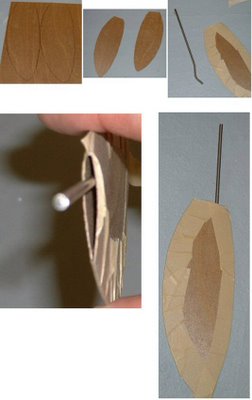
Here are some photos showing one way to build a rudder quickly and easily. The quick overview is cut out the shape in a thin material, tape the sides together, insert the rudder shaft, fill the inside of the rudder with epoxy. This takes about 10 min or so to do. Followed by installation in your boat.

John Fisher

Lay out the rudder shape on a sheet of 1/64 ply. On other class boats John used a single layer of a 6 oz carbon fiber layup, so you could also lay up some fiberglass for use on the star. To do a glass layup, just take a sheet of 6 oz or heavier fiberglass, a sheet of lexan or plexiglass, and some resin. The first step is to spread resin on the plexiglass, then apply the fiberglass and then make sure it is all wetted out. Once cure flex the plexiglass and the layup will pop off.

Shows the two sides cut out of plywood, these could be fiberglass instead. Straight sided shapes like shown and the star plans are easier to make.

Tape the two sides together with masking tape. With curved shapes He taped them together then insert the shaft and resin. If you use straight sides on the rudder you can tape one side and then open it up like a book, apply resin, then close and tape shut. The open book method uses less resin but only works with sq or straight sided shapes.

Note the bend John put in the shaft to prevent it from turning inside the rudder.

Shows the top open to pour in resin. John uses a syringe to pour in resin once the shaft is in place. You can add micro balloons to the resin if concerned about weight.


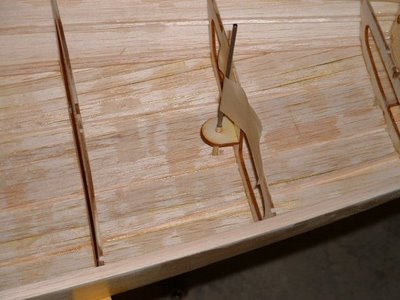
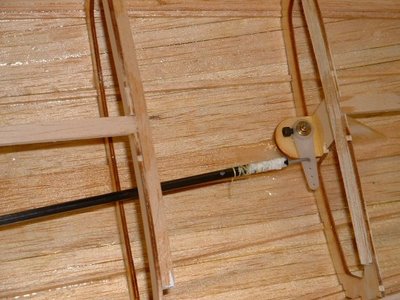
Installing Rudder in Star 45

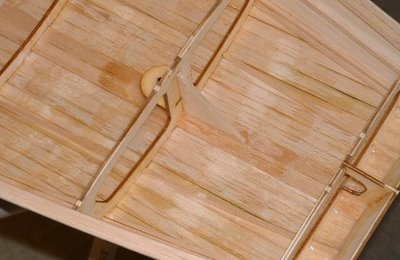
rudder brace

rudder tube


tiller

rudder link

John Fisher photographer

Read More..

Sabtu, 16 April 2016

and well because building stuff is fun

A little anarchy, about those death bets, and a whole lot of sense being made...

When I was a kid (and dinosaurs stalked the suburbs) people built stuff. In my neighborhood alone there was a guy building a in his garage, two guys were building boats in their back yards, and, Id hazard a guess, that over half the people with cars had car projects going.

Not only did people build and fix stuff when I was a kid the process of doing so provided a lot of people enjoyment and a sense of satisfaction.

It used to be when you picked up a copy of Mechanics Illustrated it was full of articles telling you how to build a boat, turbocharge your Buick, build a house or a BBQ for the house you already have, and how to make a go-cart.

My dad helped me build a go-cart from plans out of an old Mechanics Illustrated with a salvaged lawn mower engine, a bunch of reclaimed conduit from a building they tore down near us, and a seat from an aircraft salvage yard ... It wasnt pretty (in spite of the candy apple glitter paint I chose), it was LOUD, and more than likely would not be considered safe in these modern times we currently find ourselves in. Or you might just say it was AWESOME!

Building that go-cart and the parade of other projects that followed it pretty much colored my life as a kid.

Of course, if you pick up a copy of Mechanics Illustrated today, you wont find very much about fixing or building things anymore and its prety much all about buying stuff and suchlike with no plans for boats or dumb and dangerous go-carts.

That kind of sucks...

I mention all this because The Coastal Passage did an article about a 30-foot catamaran design some time ago that just about anybody could build and they even published plans (of sorts) for it. The magazine is free and you can download it here. Its the sort of very doable and affordable project  that in 1965 would be being built in backyards all across America.


My dad, for one, would have been all over it and it would have resulted in one of those days when you wake up to the riddle of a hundred sheet of plywood in the driveway, dad making pancakes in the kitchen, and a bunch of plans sitting on the kitchen table to talk about over breakfast.

Beats going to the mall for some recreational shopping all to hell...


Listening to Ranger Bob

So it goes...


Read More..

Senin, 11 April 2016

Wooden Boat Show Family Boat building

We are catching up with a nons stop summer of boating events and where best to start the series of updates than with the Wooden Boat Show in Mystic, CT. In 2 1/2 days, a father son duo built one of our Echo Bay Dory Skiff kits. They discovered that there is a lot of boatbuilding, sweat, creativity and work to do even starting from a kit.

style=clear:both;float:right; 

They launched on the third day at 3pm. They were very proud and perhaps glad they had a break to enjoy their success. My former life was a teacher and instructing people to build their own boats. Getting new folks into small boats, building their own boats from kits, and experiencing success in everyway is the number one priority for our customers. Likewise, we felt this years Family Boatbuilding was a success and will plan to do these boats again next year.

style=clear:both;float:right; 
Posted
Read More..

Minggu, 21 Februari 2016

Economics of Kit Building

I receive a lot of questions and comments regarding the true cost of building a boat from scratch, full size patterns, and kits. Since I track time and materials closely, I have found that building from kits makes a lot of sense from an economic stand point. I took some discussions with customers/potential customers and put together this PDF on the economics of kits.

In a nutshell, the cost of building from a kit is not as much more than building a boat from scratch as people think because of the extra plywood required to build from scratch not to mention the time savings.

As of last week

In the meantime, we are making progress on the first professionally built Goat Island Skiff (yawl version) which will be at the Maine Boatbuilders Show in Portland on March 18-20th. Please stop by. Well be in building 2 near the stairs up to food court.

When I post next, Ill have a PDF link that goes into more detail about how the designs/kits are produced in CAD and CNC cutting.


Read More..